The crown
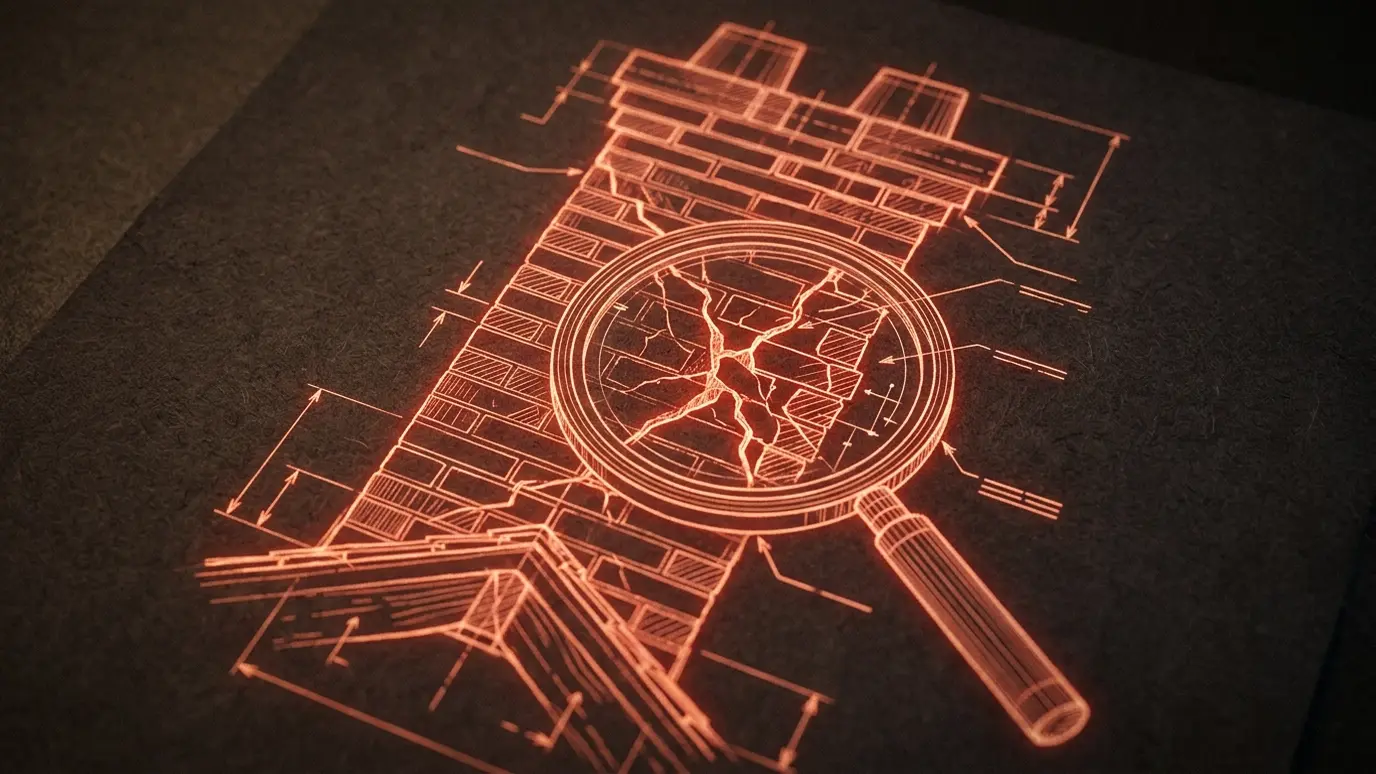
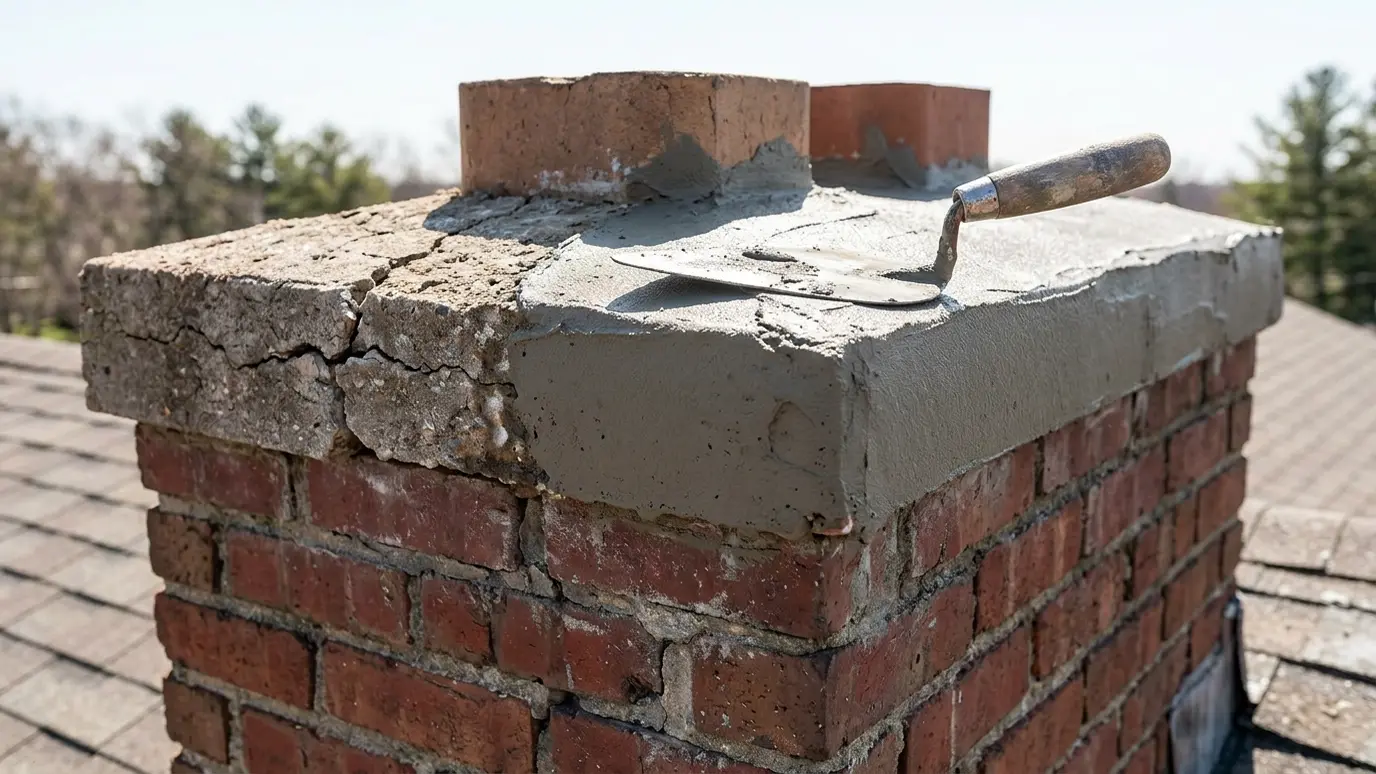
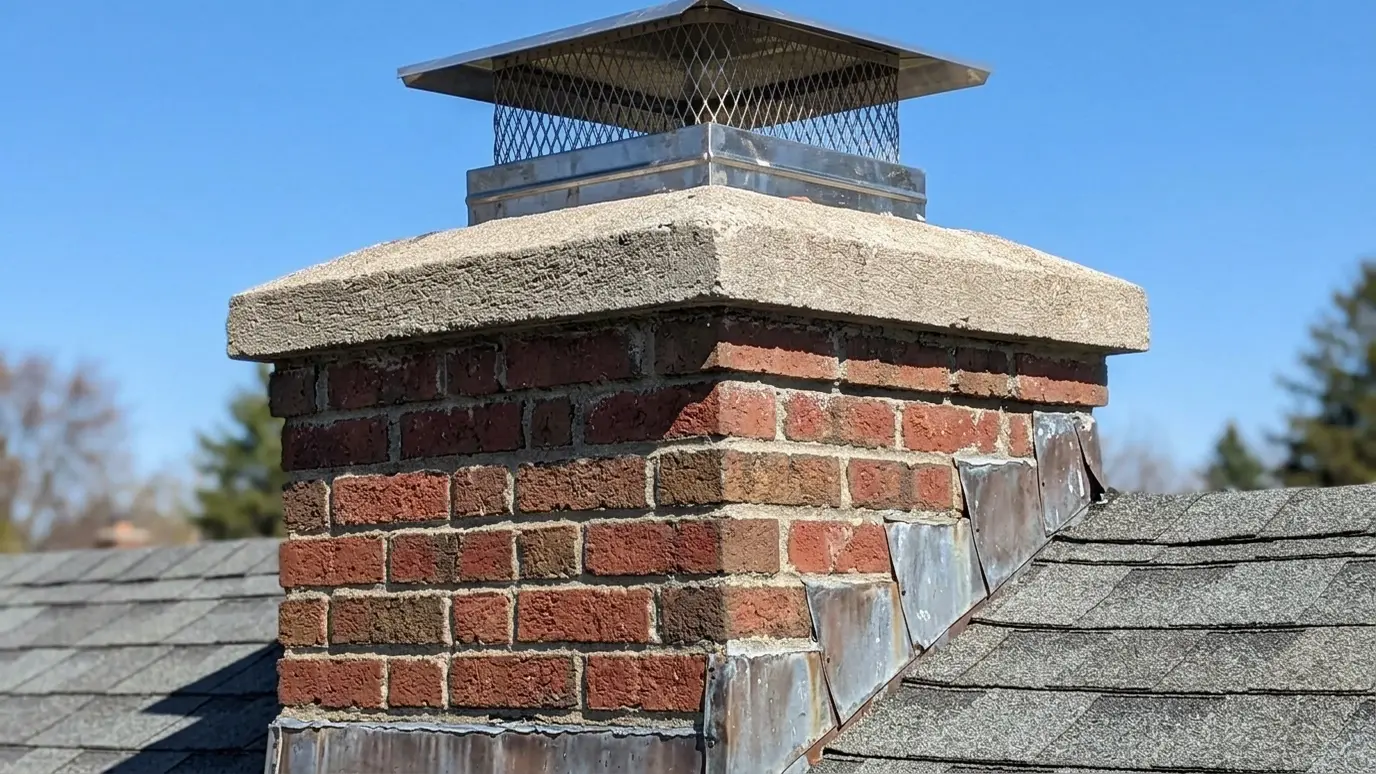
The slab at the top of the masonry that sheds water. Hairline cracks are common and should be sealed. Wide cracks need rebuilding.
It protects the brick below.
The cap
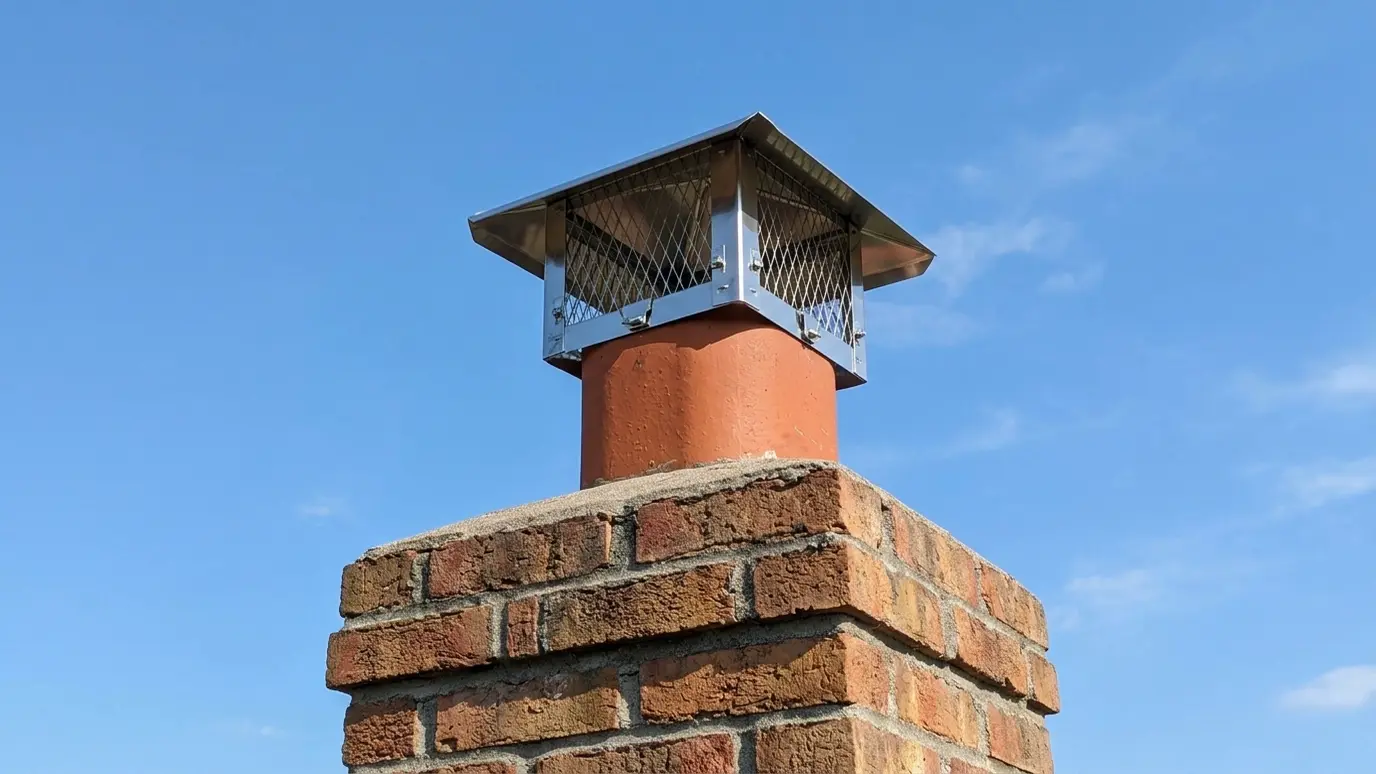
Covers the flue and keeps out rain, animals and debris. A good cap has a screen and fits snugly.
Rust and clogged mesh mean replacement.
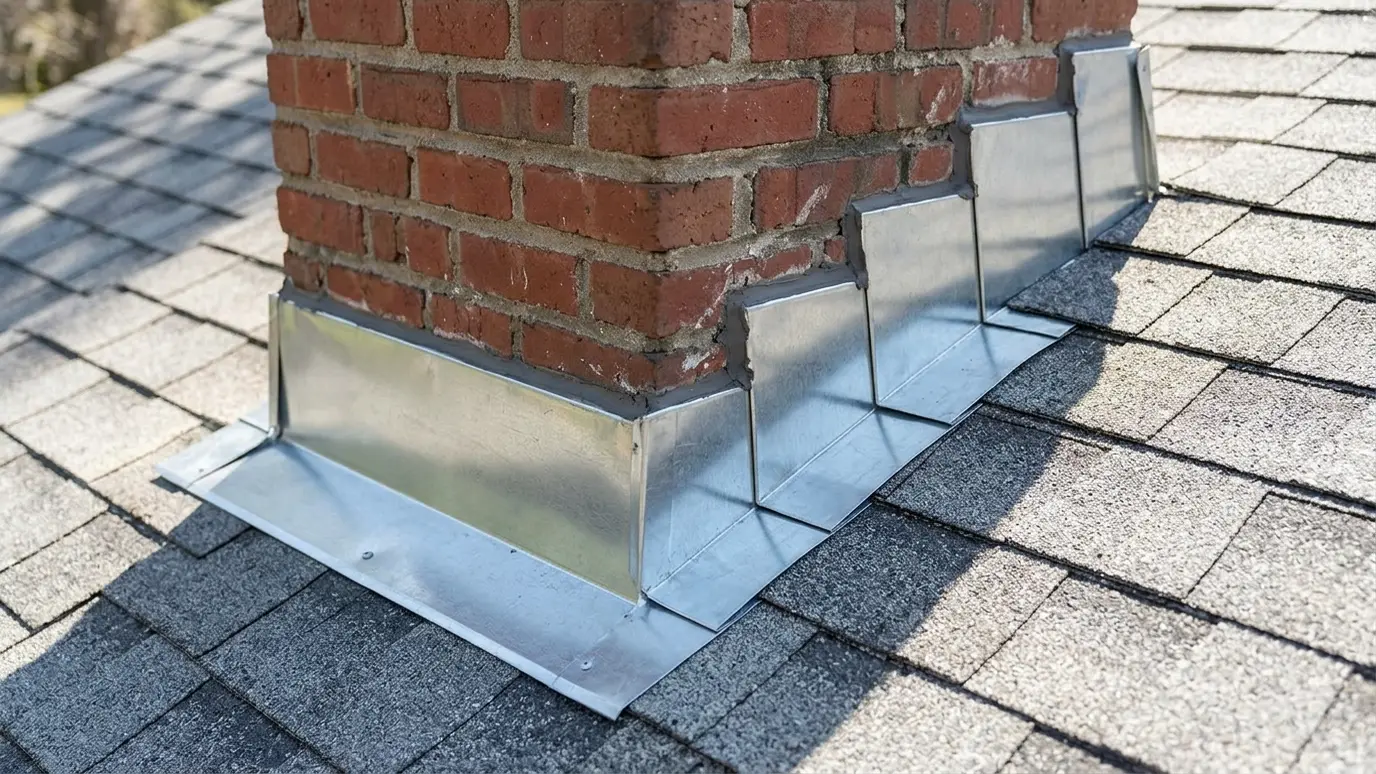
The flashing
Metal where the chimney meets the roof. Step flashing and counterflashing shed water. Tar patches are only temporary.
Most chimney leaks start here.
Checking from the ground
Look with binoculars for cracks, rust, bent metal and missing bricks. Check ceilings near the chimney for stains.
Do not climb the roof yourself.
How they fail
Freeze and thaw, rust, poor materials and settling of the chimney all play a part. They fail slowly, then all at once in a storm.
Regular checks catch them.
The value of early repair
These repairs are small compared with a rebuild, and they protect everything below.
Fix them first.
Keep the crown sealed, the cap on and the flashing tight and your chimney will last much longer.