How creosote forms
Smoke contains vapors that condense on the cool walls of the flue. The deposit builds up with every fire.
Cooler flues, wet wood and low fires all make more.
The three stages
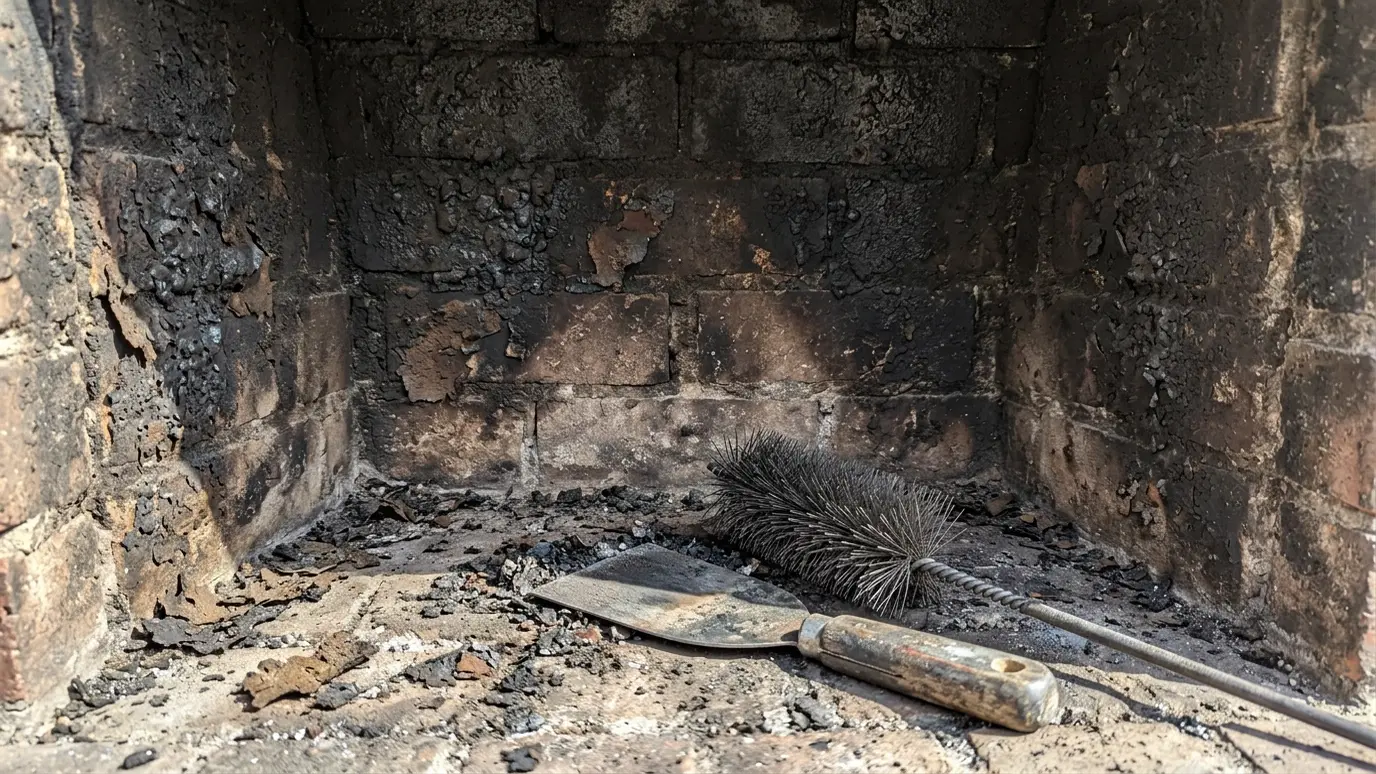
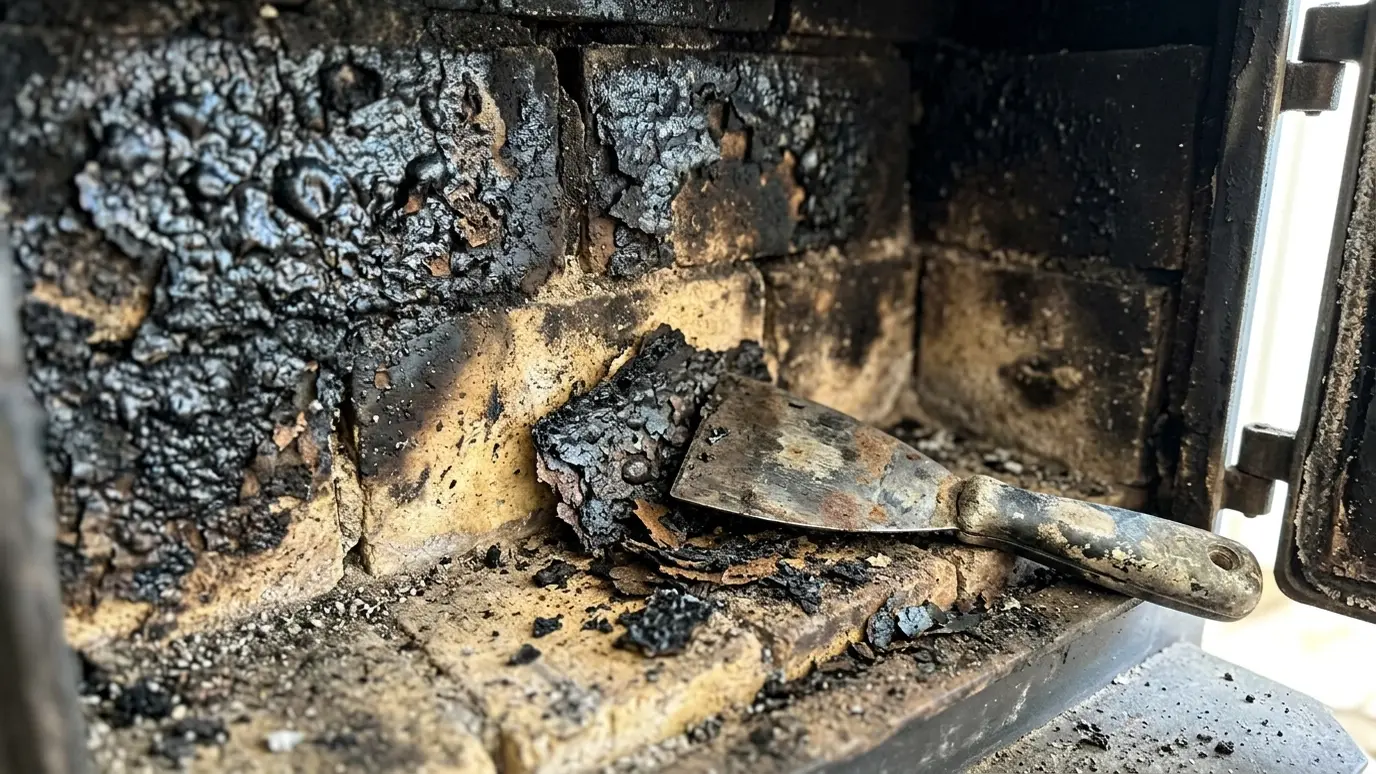
Stage one is dusty soot that brushes away. Stage two is flaky, tarry and harder to remove. Stage three is hard, shiny glaze that burns very hot.
Each stage is more dangerous than the last.
What a chimney fire is like
Some are loud, with a roar like a train and flames from the top. Others burn slowly with little noise, and the owner never knows.
Either can crack the flue and damage the chimney.
What to do in a chimney fire
Get everyone out, call emergency services, close the air supply if it is safe and do not use water on the fireplace.
Have the chimney inspected before using it again.
How to prevent them
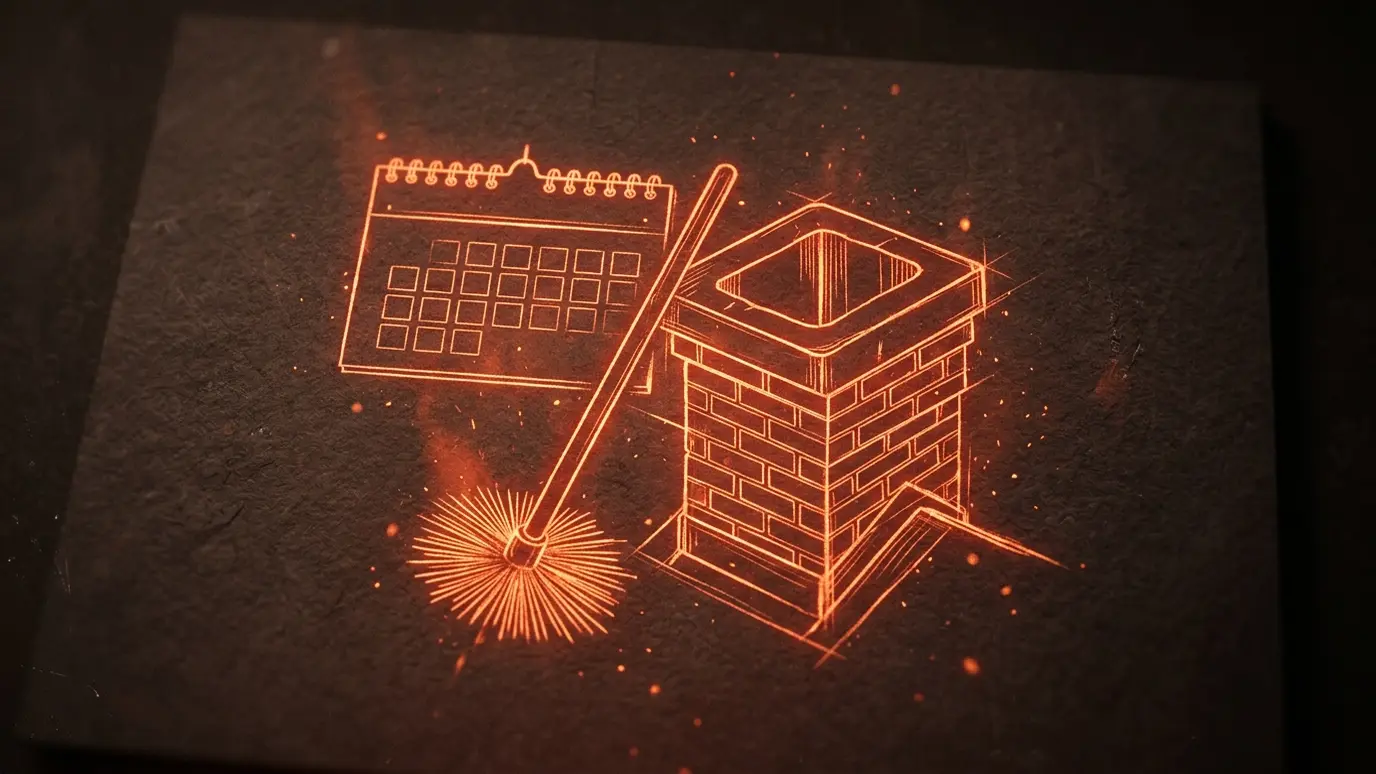
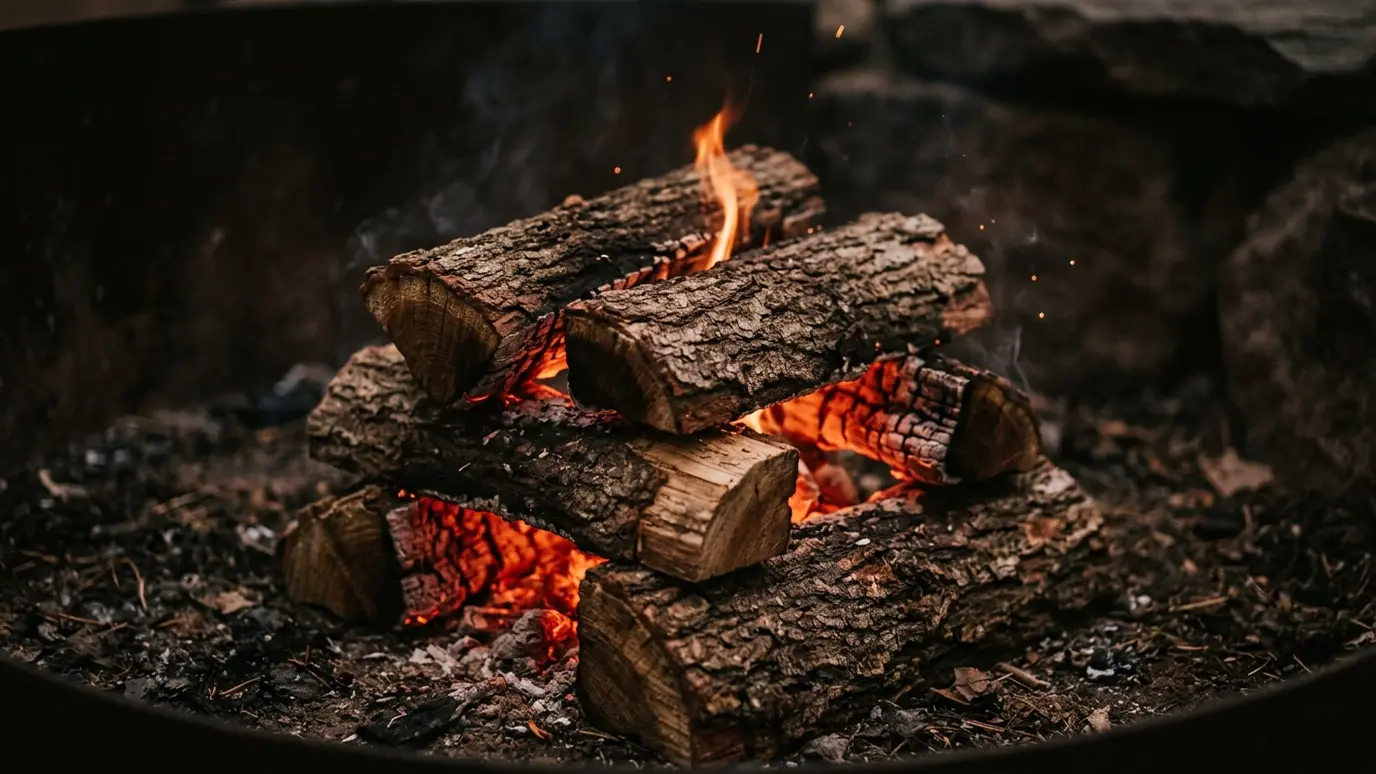
Burn dry wood, keep the fire bright, do not smolder it, sweep regularly and have the chimney inspected each year.
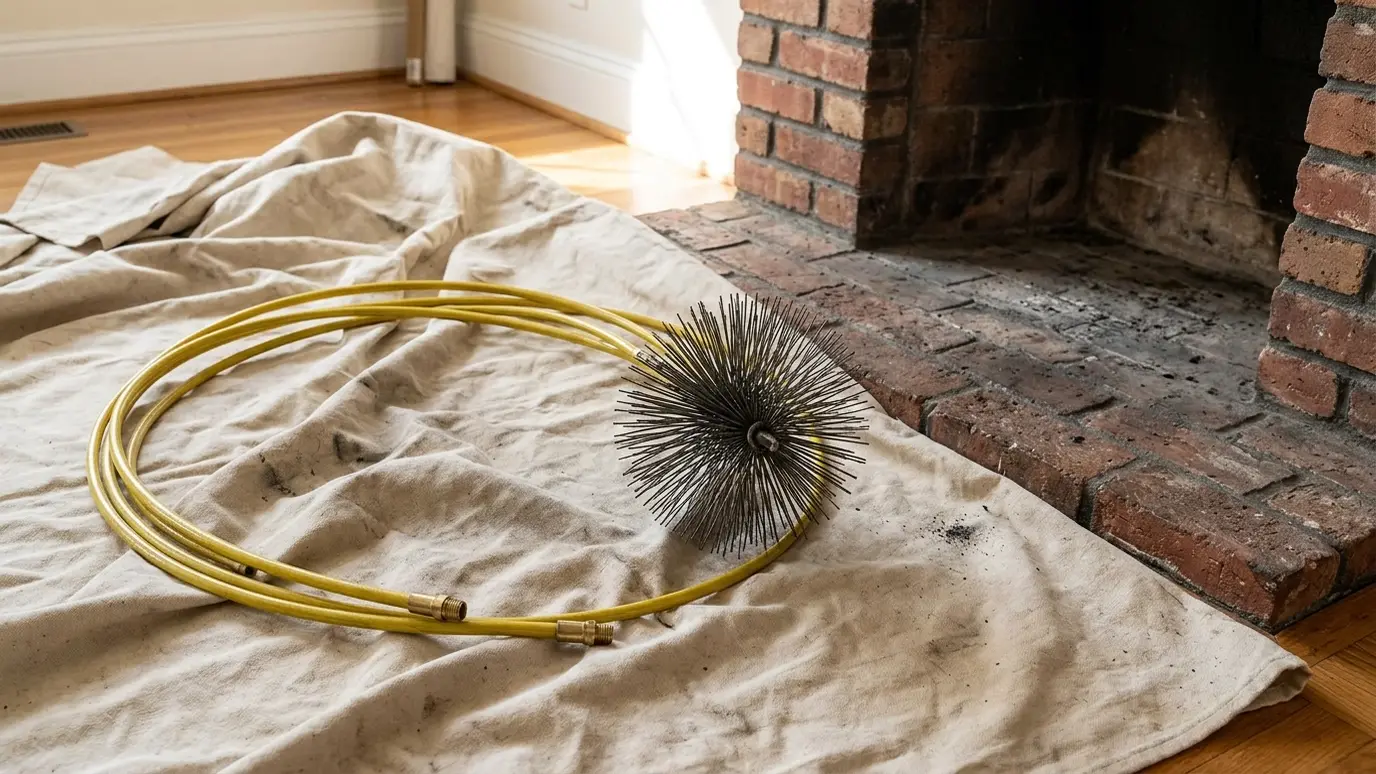
Sweeping removes the fuel.
After any fire
A camera inspection finds cracks and damage that are invisible from the top.
Do not skip it.
Burn dry wood hot, sweep on schedule and never use a chimney again after a fire without an inspection.