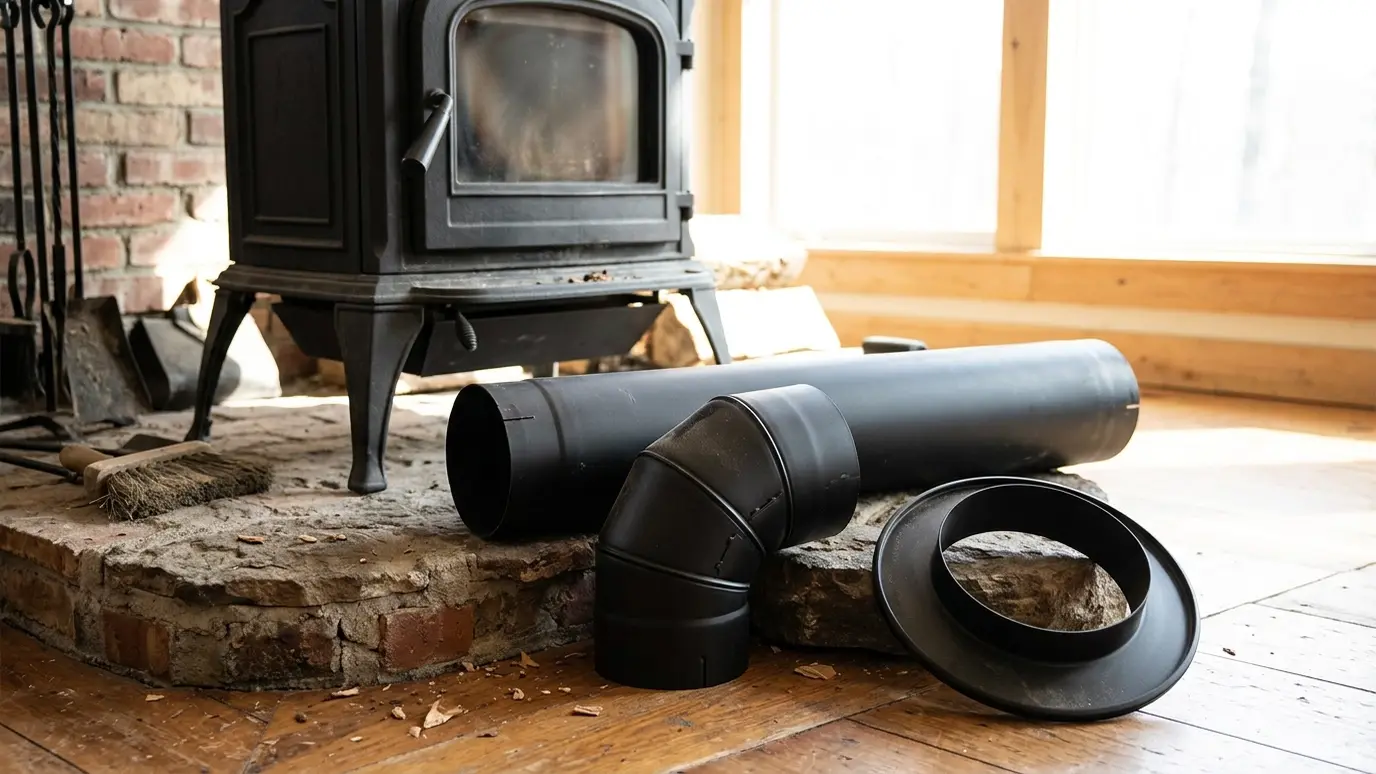
Rusted, loose or poorly fitted stovepipe replaced with tight, correctly sized pipe and a safe connection to the flue.
The pipe that connects a stove to the chimney is the hottest, most worn part of the system. Condensation and creosote eat at it, and years of heating and cooling loosen the joints. A rusty or loose connector can leak smoke into the room, drop creosote on the floor or, worse, let heat reach combustible materials.
We replace worn stovepipe with new pipe of the right size, gauge and finish. The pipe goes in with the crimped end down so creosote runs back into the stove, every joint is secured with screws and the connection to the thimble or liner is tight. We also check clearances to walls and ceilings and the condition of the thimble where the pipe passes through.
Rust, holes, loose joints, sagging sections, black stains and smoke smell near the stove are all signs the pipe needs replacing.
Heavier gauge pipe lasts longer. Black pipe is common, and stainless or double-wall pipe is available for tighter clearances.
Each section fits with the crimped end toward the stove and is secured with screws. Short, straight runs draw best.
Where the pipe goes through a wall or ceiling, a thimble protects the structure. We check the thimble and the distances around the pipe.
Drag the handle to compare.
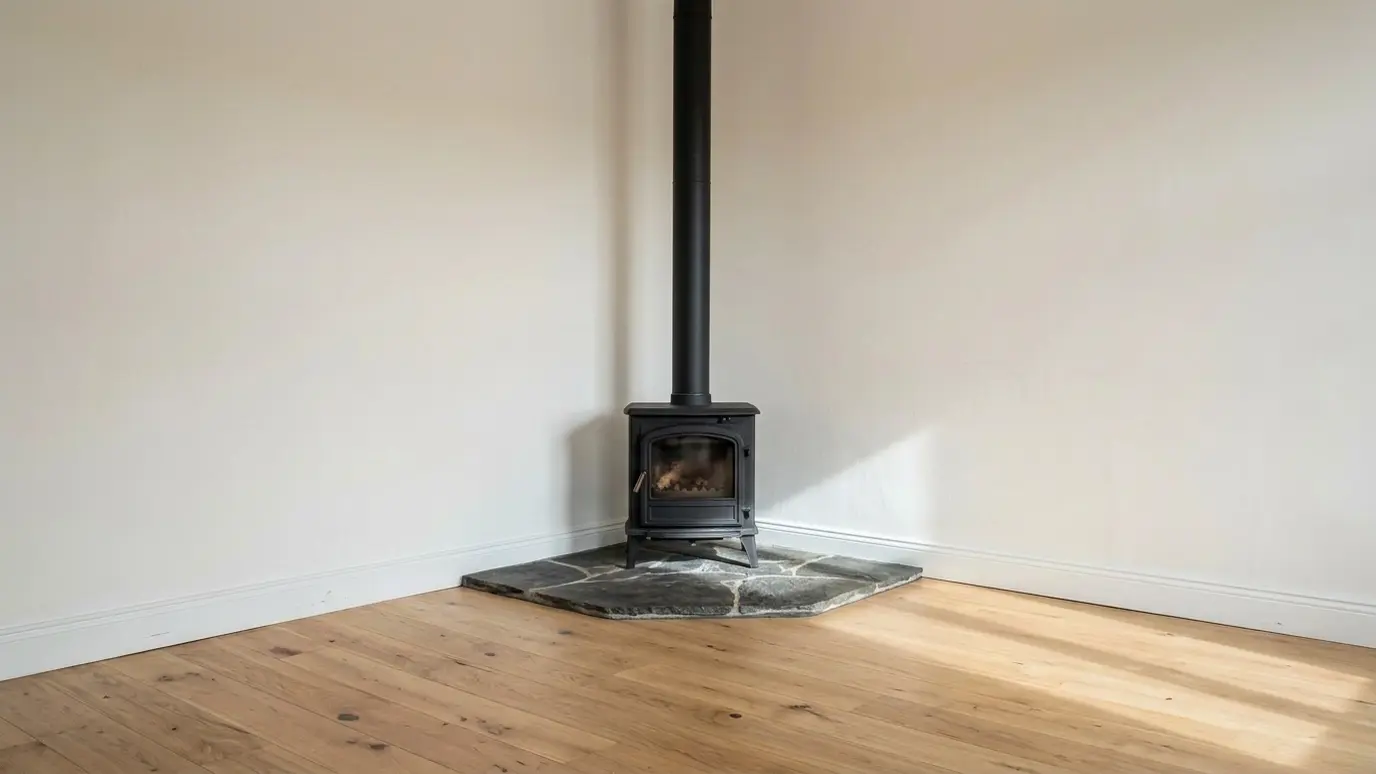
 BeforeAfter
No smoke leaks.
Walls and ceilings protected.
Lasts longer.
Where the pipe passes.
Creosote runs back.
Floors protected.
Every topic has its own page with what to expect and how we approach it.
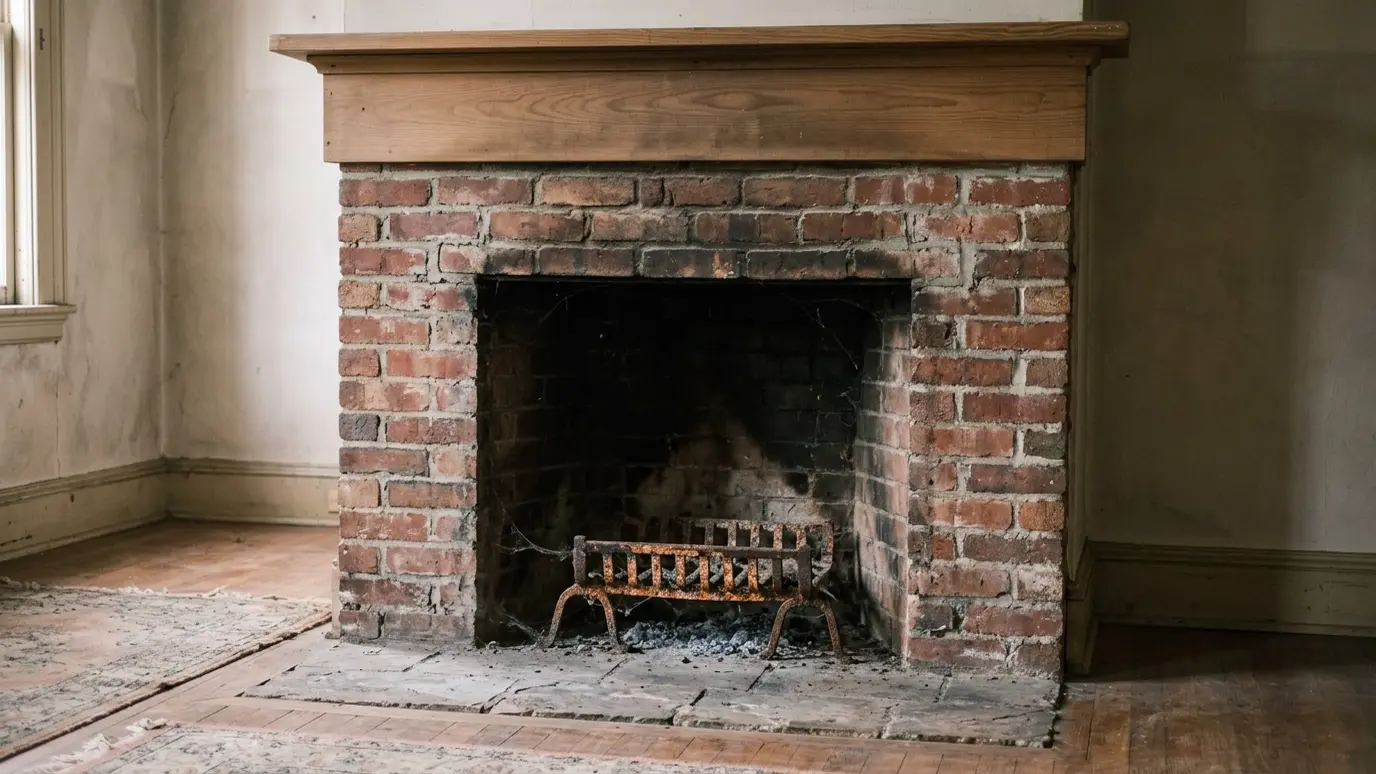 Project situationUnused FireplacesA fireplace that sat cold for years can heat the home again. Here are the steps and the…Learn more
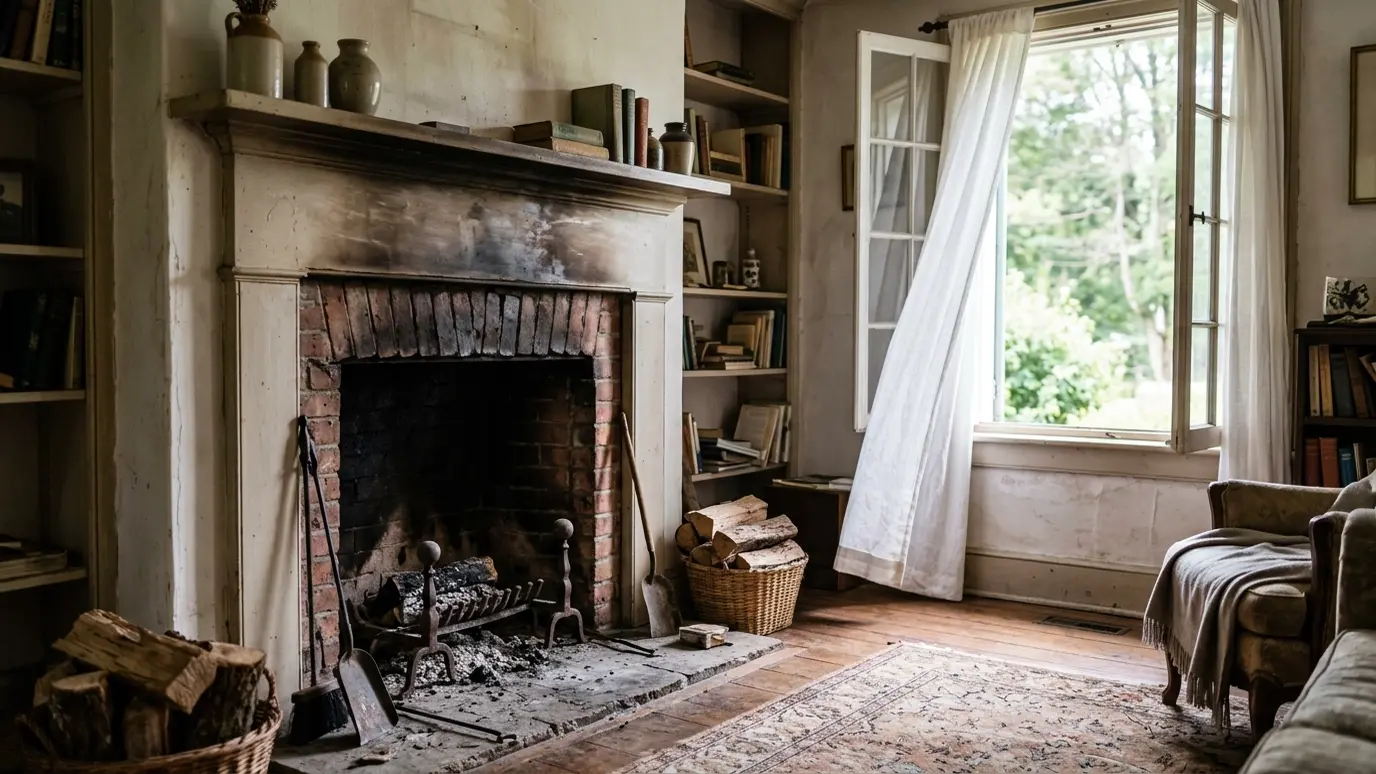 Project situationSmoke and Odor ProblemsSmoke in the room or a smoky smell in summer both have causes. Here is how we find…Learn more
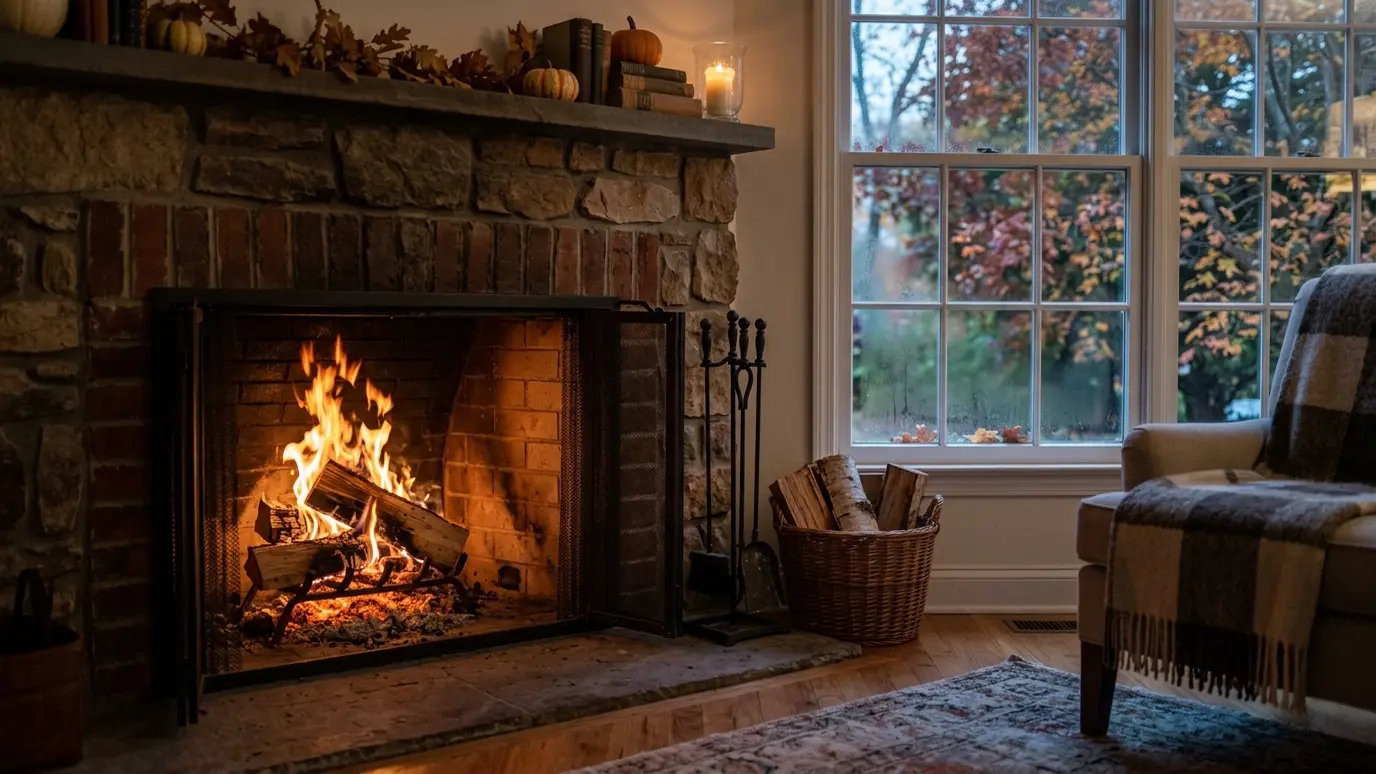 Project situationFirst Fire of the SeasonThe first cold night is not the time to find out your chimney needs work. Here is how…Learn more
Tell us what you burn and how often to see when your chimney should be swept and inspected.
You tell us about the chimney, fireplace or stove and what you have noticed, and we set a visit that fits your day.
We look closely at the chimney, inside and out, ask how you use it and take photos of anything of note.
We explain what is urgent, what can wait and what is optional, and give you a written scope and options.
We lay drop cloths, seal the firebox and protect the roof and landscaping before any work begins.
We sweep, repair or install with the right tools and materials, checking our work as we go.
We clean up, show you what we did, share tips and set a reminder for your next visit.
Light pipe may last a few seasons with heavy use. Heavier pipe lasts longer.
Moisture and creosote acids. A hotter, drier burn slows it down.
No. The pipe must match the stove, the fuel and the clearances.
It can be. Loose joints or a draft problem should be checked.
Usually a couple of hours.
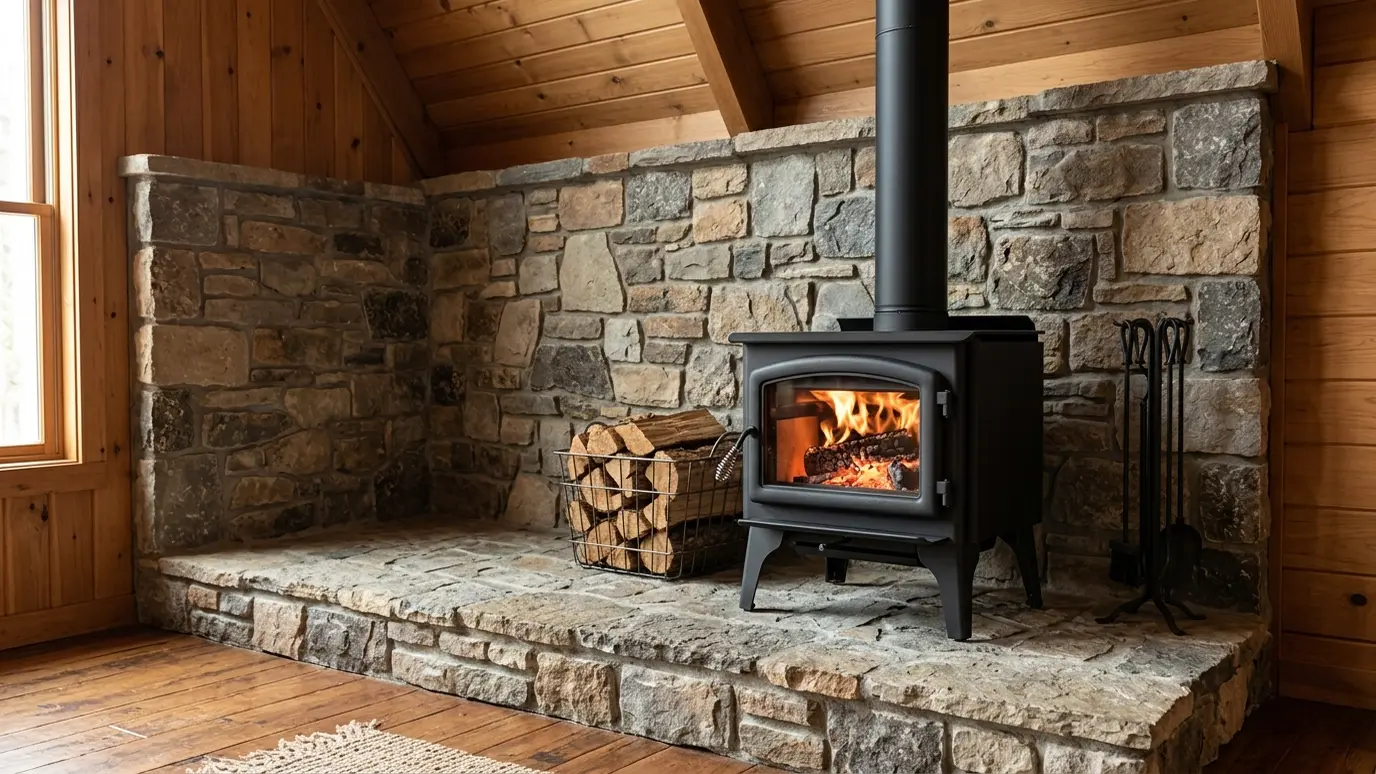 Wood Stove InstallationA new wood stove set on a safe hearth with the right pipe, clearances and liner, ready to…Explore
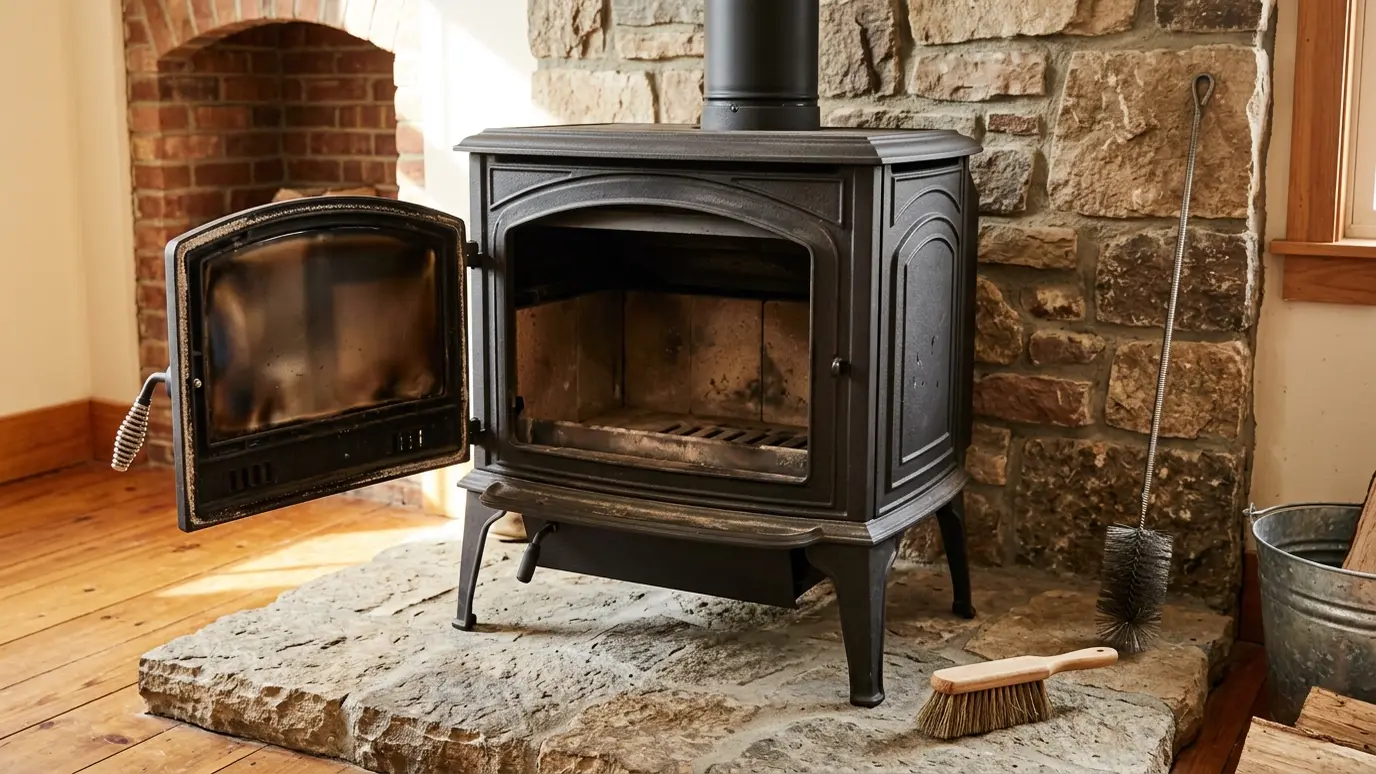 Wood Stove and Insert CleaningCleaning of the stove body, baffles, stovepipe and flue so efficient wood heating stays efficient and safe through…Explore
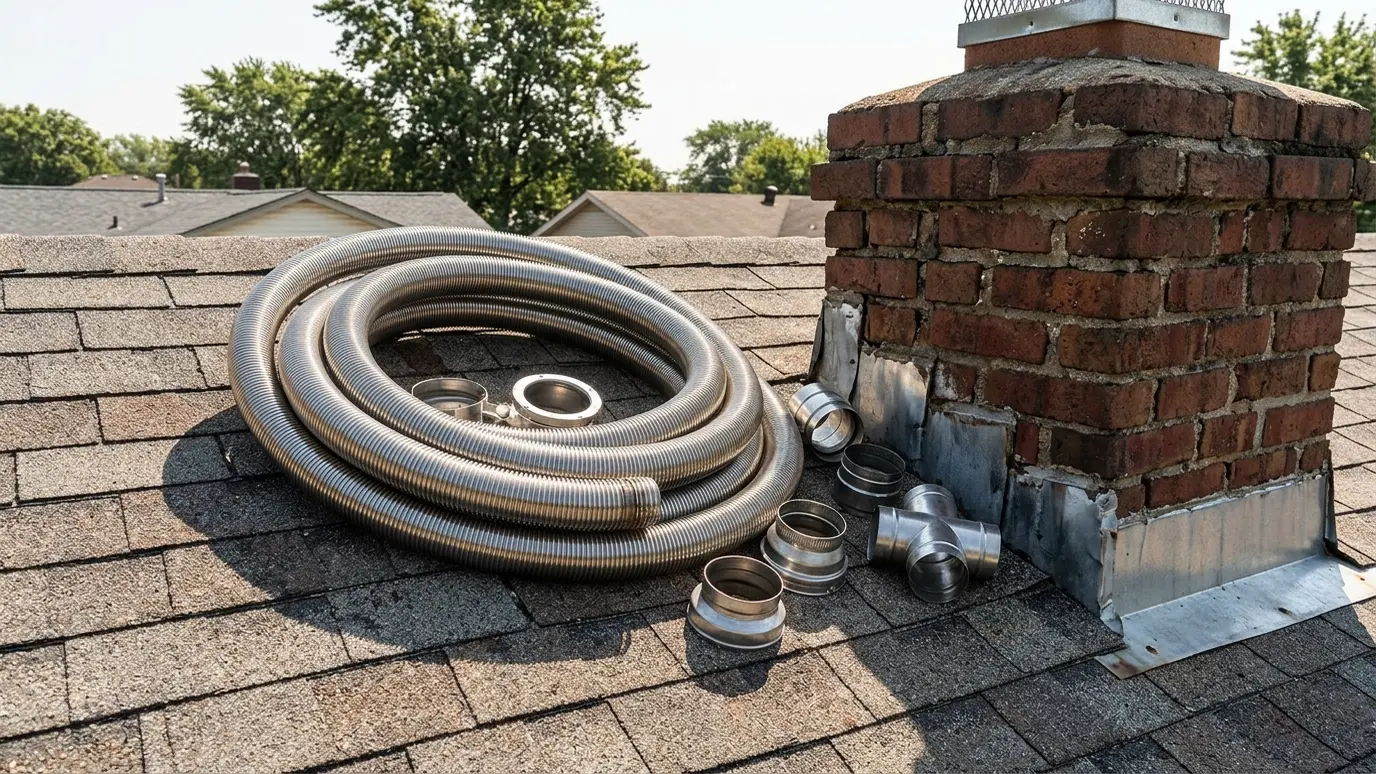 Chimney Liner InstallationA properly sized liner gives smoke a safe, sealed path up the chimney and protects the masonry from…Explore
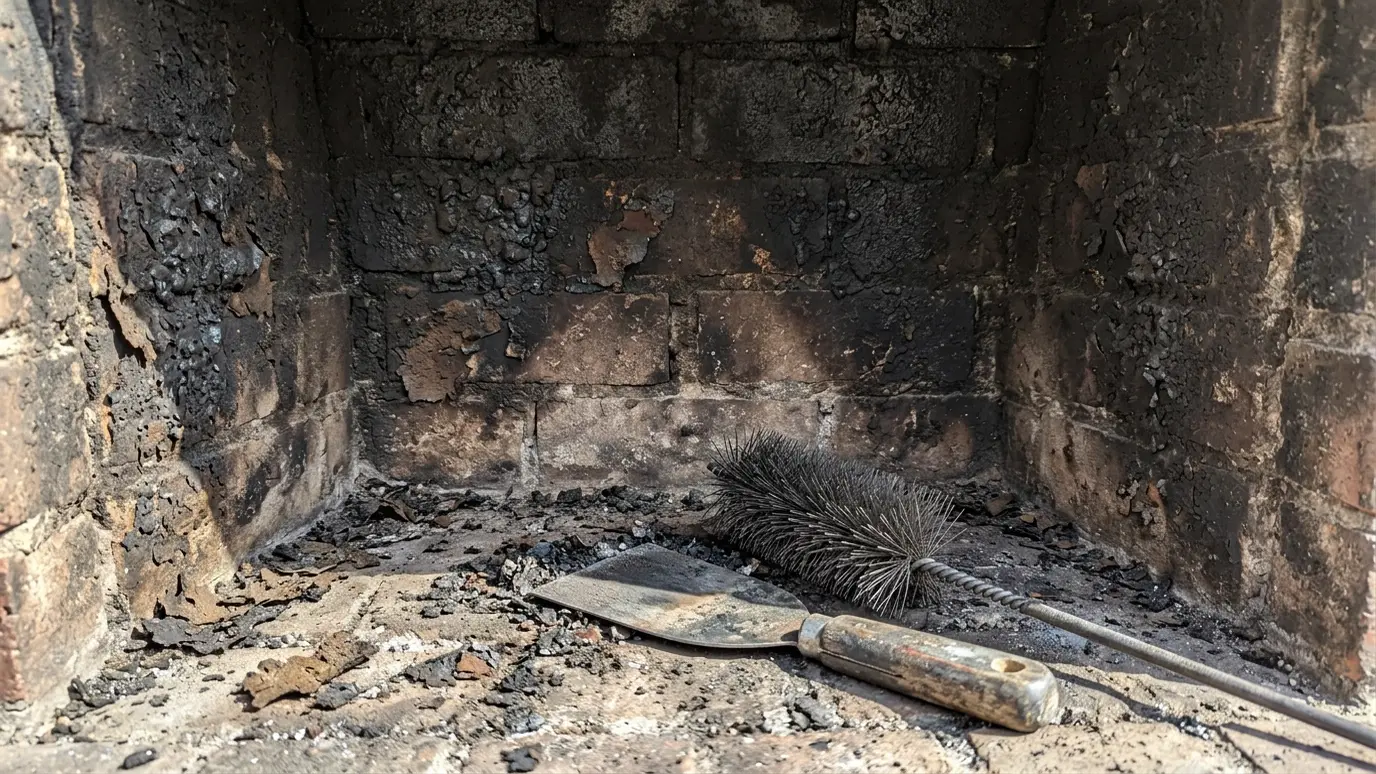 Creosote and Glaze RemovalHeavy creosote and shiny glaze are removed with the right tools and methods, so a dangerous buildup stops…Explore
Tell us about the project and we will call you back to talk it through.
Or call (615) 357-7797 to talk now.