What carbon monoxide is
A colorless, odorless gas made when fuel burns without enough air. It cannot be seen or smelled.
It is dangerous even in small amounts over time.
How it gets in
A blocked or cracked flue, a closed damper, a downdraft or a failing appliance can all let it into the house.
Tight houses can make it worse.
Warning signs
Headache, dizziness, nausea and tiredness, often better when you leave the house. Pets and several people feeling sick at once are clues.
Treat the signs seriously.
Alarms
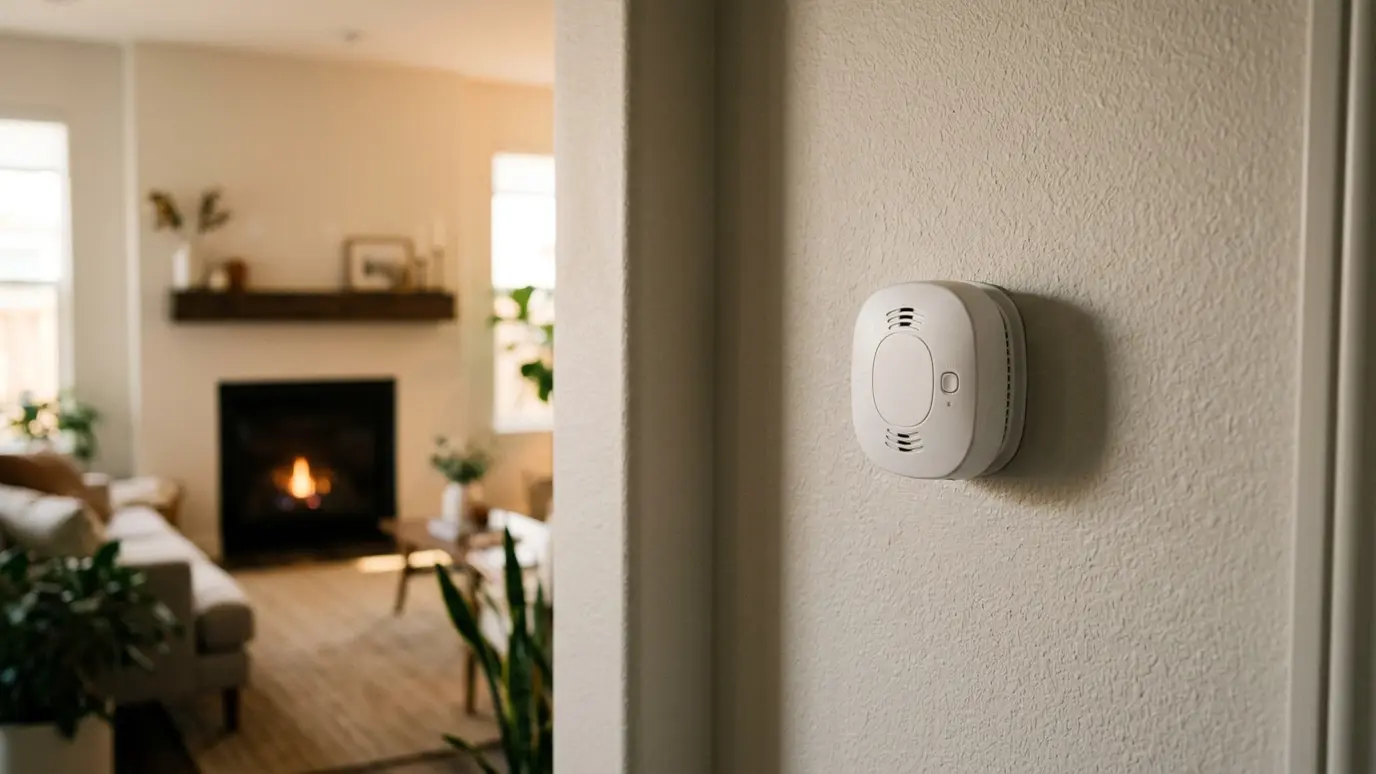
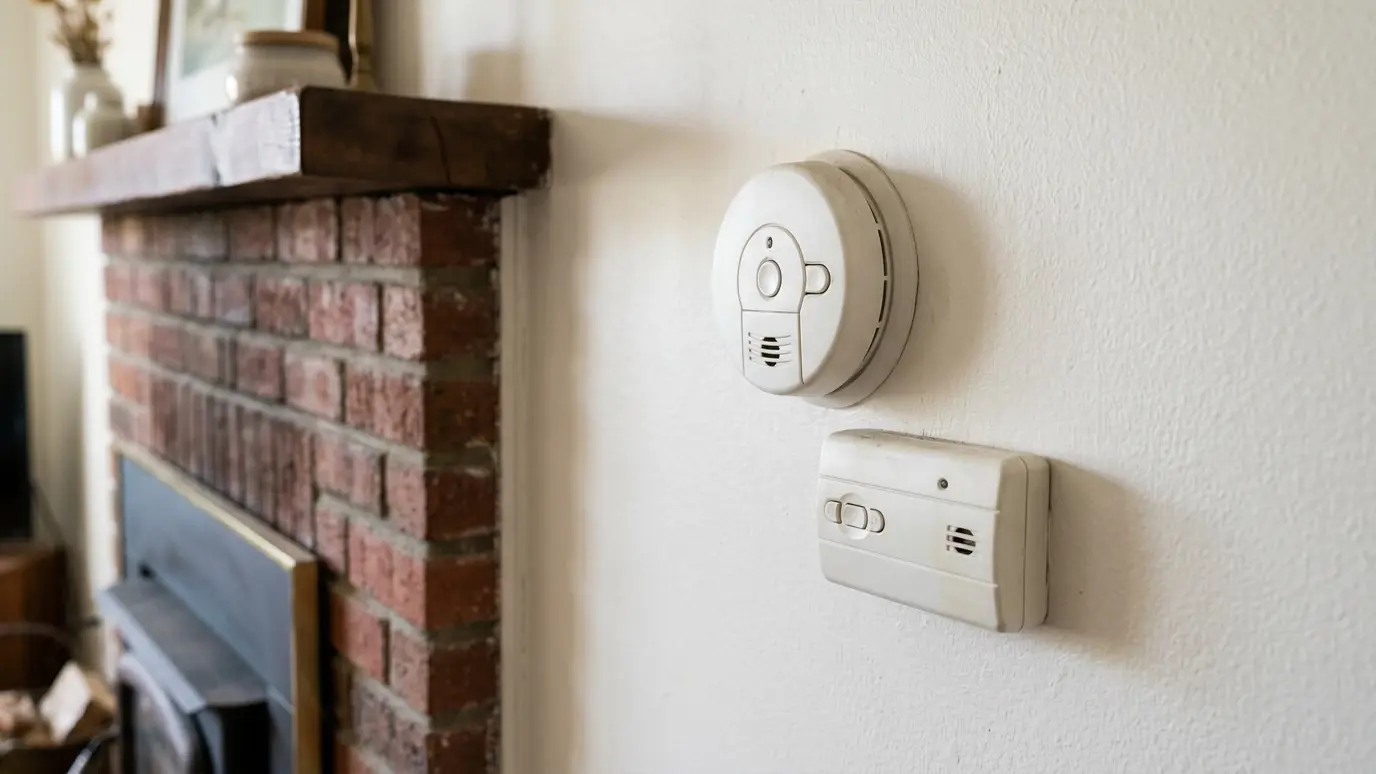
Install carbon monoxide alarms on every level and near sleeping areas. Test them monthly and replace them as the maker advises.
Alarms are a backup, not a replacement for upkeep.
What to do
If an alarm sounds or you feel sick, get everyone outside, call emergency services and do not go back in until it is cleared.
Do not ignore a chirp.
Prevention
Yearly inspection and sweeping, open dampers during fires, clear caps and well-serviced gas appliances prevent most problems.
Keep appliances vented.
Keep the flue clear, use working alarms on every level and get outside first if one sounds.